The Bay Harbor Islands House Is Free. You're Paying for the Dirt Underneath It.
A home at 1231 101st Street has been sitting on the market for more than a year. It was listed at $6.7 million, and as of this writing it has yet to find a buyer, even as similar properties nearby have closed near $3.975 million in about 68 days. Same island. Same zoning. Same waterfront access. The seller priced the house. The buyers were pricing the lot underneath it, and they walked.
That gap is not a fluke of one stubborn owner. It is the clearest window into how the Bay Harbor Islands single-family market actually works, and it explains why the town's own median price numbers refuse to agree with each other. A market breakdown published in late June 2026 put the town's condo median sale price near $415,000, while its single-family median ran closer to $1.35 million, inside the exact same zip code. Blend those two products into one town-wide figure and you get a number that describes neither market accurately.
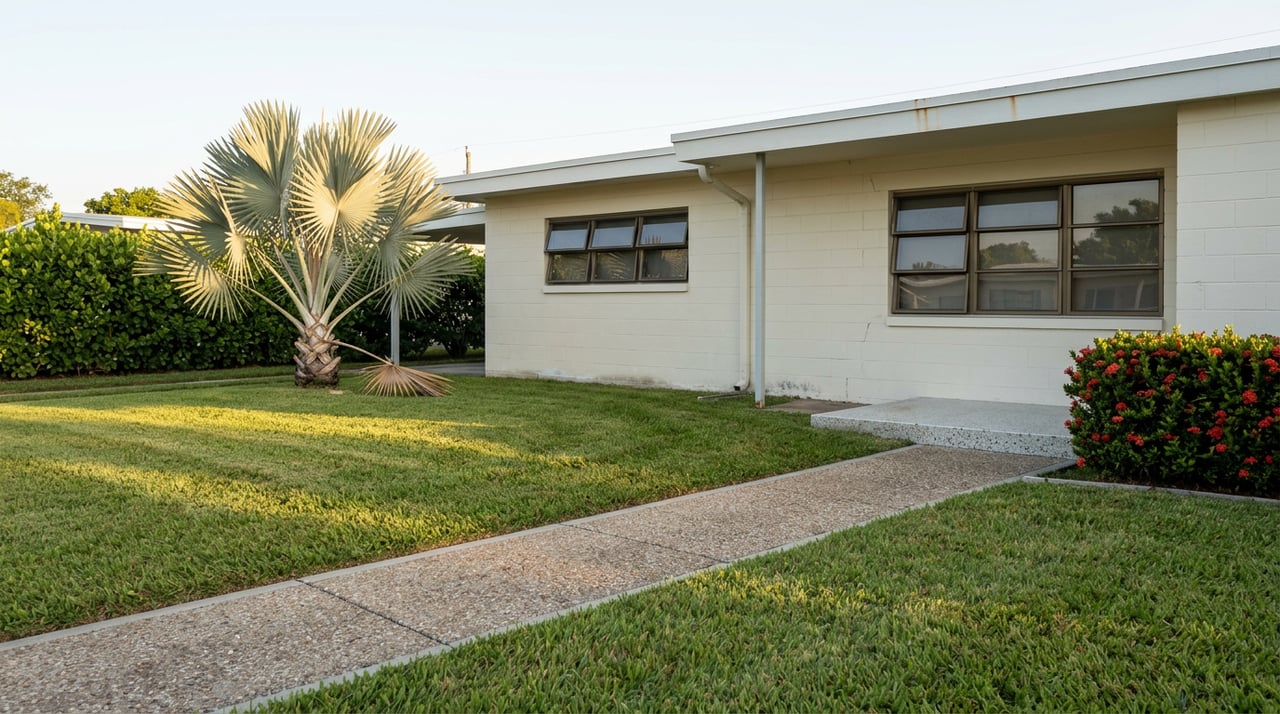
Start with the structure sitting on a typical West Island lot. Most of these homes were built in 1957. Assessed data on the town's single-family stock shows the land under a typical property valued near $2,578,000, while the house itself adds roughly $444,000. Do the arithmetic and about 85 cents of every dollar you spend is going into the ground, not the walls.
That is not a quirk of one appraisal cycle. It is the mechanical result of Florida's Save Our Homes tax cap, which limits annual assessment increases to 3 percent for homesteaded owners. The longer someone stays, the wider the gap grows between what their home is worth and what they are taxed on, which rewards never selling. The median owner in Bay Harbor Islands has held their property for six years, and close to a third of all parcels have not traded hands in more than a decade. Every year that gap widens, fewer owners have a financial reason to list, and the buildable land under those aging houses gets scarcer by default rather than by design.
That scarcity is the whole story. It is why a 68-year-old house with no updates can share a street with a $6 million teardown offer and both numbers make sense once you separate what is being paid for the structure from what is being paid for the dirt.
On August 6, an affiliate of David Burstyn's Winston Capital Management closed on a nearly half-acre waterfront homesite at 10312 West Broadview Drive for $18 million, in an off-market transaction with a family trust. The deal works out to roughly $914 per square foot of land, and the site is expected to support a custom home of around 12,000 square feet. There was no meaningful structure being purchased. The same parcel traded for $12.3 million in 2023, which puts the appreciation entirely on the ground itself over a three-year window.
That sale sits inside a run of comparable land plays on the same street. A waterfront estate at 9520 West Broadview sold for just under $22 million in 2024, and another at 9640 West Broadview closed at $21.8 million, setting a record price per square foot for the community at the time. None of these transactions are outliers competing with the town's reported single-family median of roughly $1.35 million. They are a separate market entirely, one where buyers are underwriting redevelopment potential on a fixed supply of bayfront lots, not comparing kitchens.
If you are shopping in that price band, the comparable sales you need are not the town's median. They are per-square-foot land values on the same street, and those numbers move independently of whatever a portal's headline figure says this month.
Bay Harbor Islands is 0.40 square miles split into two islands with a zoning framework that has not changed since the town was filled in after 1945. West Island is reserved for single-family homes only. East Island is built around multifamily development. That single planning decision is the reason the town's median price behaves so inconsistently across different reports.
| West Island (single-family) | East Island (condo) | |
|---|---|---|
| Typical product | Land-value teardowns and renovated homes on fixed lots | Boutique mid-rise and new-build condo units |
| Reported median | Roughly $1.35 million | Roughly $415,000 |
| What drives price | Lot size, water frontage, redevelopment potential | Unit finish, building age, amenity tier |
The East Island pipeline has kept moving even as the West Island's lot supply stays frozen. THE WELL Bay Harbor Islands, an eight-story building at 1160 Kane Concourse developed by Terra Group, secured a $238 million refinancing loan in late 2025, and its office component is largely pre-leased. That kind of activity pulls the condo side of the market in one direction while the single-family side sits still, held up by owners with no tax incentive to sell. A single town-wide median can never reconcile those two trajectories, because it was never describing one market to begin with. It is describing two, filed under the same zip code.
Understanding the land-value mechanism only matters if it changes what you do with it. Here is where it gets expensive to ignore.
Across recent single-family closings in Bay Harbor Islands, 94 percent sold below the original asking price, with a typical discount of 10.8 percent, translating to a median reduction of $553,000 off the ask. That is not a market correcting gently. That is a market where sellers keep pricing the house and buyers keep countering with the land value underneath it.
The penalty for ignoring that gap compounds if a listing sits and gets relisted. Homes that go back on the market after an unsuccessful run take an average of 686 days to close, more than three times longer than first-time listings, and they typically close for less than they would have if priced correctly the first time. The listing at 1231 101st Street, still asking $6.7 million after 399 days, is the version of this story still in progress. The comparable properties that sold near $3.975 million in roughly two months are the version that already played out correctly.
If you are evaluating a single-family property on West Island, a few adjustments follow directly from the land-value mechanism:
None of this is a case against Bay Harbor Islands. It is a case for reading the market on its own terms rather than the terms a national portal's algorithm assigns it. A town this small, with a zoning line this sharp, was never going to average out cleanly, and the properties that sell fastest are the ones priced by people who already understood that.
Why do different sources report such different median prices for Bay Harbor Islands? Because they are sampling from a mix of condo sales on East Island and single-family land sales on West Island without separating the two. A town with 0.40 square miles and a handful of closings in any given quarter will show a median that swings sharply depending on which product happens to trade that month.
Does renovating an older single-family home in Bay Harbor Islands add resale value? The available data suggests the structure accounts for a small share of total value on most West Island lots, so cosmetic updates are unlikely to move a sale price the way lot size or water frontage does. Any renovation decision should weigh that split before committing capital.
What does the Save Our Homes tax cap have to do with land scarcity here? It caps annual assessment growth at 3 percent for homesteaded owners, which widens over time between assessed value and market value the longer someone stays. That gives long-term owners a built-in financial reason not to sell, which is part of why so much of the town's single-family land has not changed hands in over a decade.
If you are weighing a purchase against comparable land values, or trying to price a legacy single-family home correctly the first time, Fajer International Realty can walk through the specific lot-level comparables that actually apply. Schedule a Private Consultation to start with the numbers that matter for your street, not the town's blended median.
Stay up to date on the latest real estate trends.
At Fajer International Realty, we are committed to bringing our clients to another level as representatives of investors, developers, buyers, or sellers. Get in touch today!