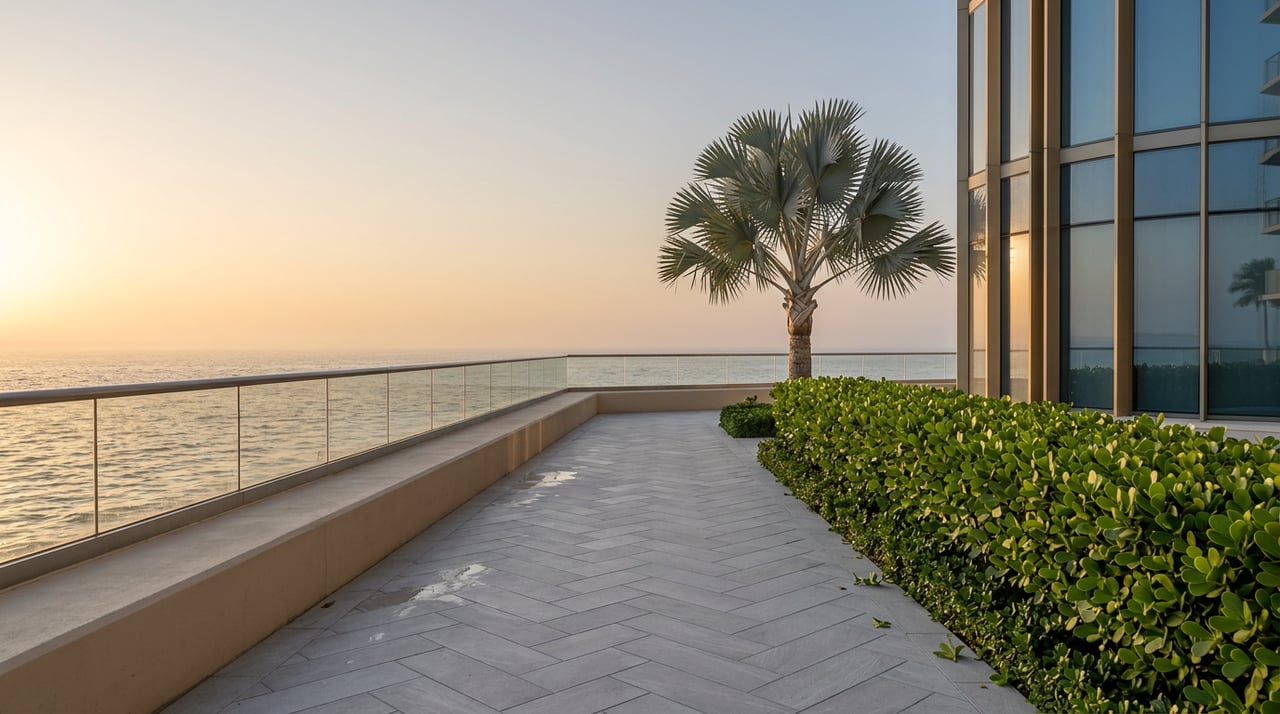
Brickell Key Baywalk Closure: What's Actually Being Rebuilt
Somewhere on Brickell Key right now, someone is standing at a closed gate near the bridge, phone in hand, trying to figure out where else to walk. This has been happening for more than a year. Miami New Times ran two separate stories on it in the summer of 2025, and residents were still filming themselves at the barricades on TikTok months later, one calling the closure something that hurt more than a breakup and another writing, as Miami New Times reported, that Brickell Key walks are good for the soul. The jokes were real, but so was the loss. The 1.5-mile paved loop around the island, flat, shaded by palms, lined with skyline views across Biscayne Bay, was the closest thing this small, private island had to a town square.
The closure involves three projects, running on three different timelines and involving three different parties. Only one of them explains why the loop you remember isn't simply coming back the way it left.
The first project is the one everyone already knows. The Mandarin Oriental Miami, which anchored the southern tip of the island for 25 years, closed on May 31, 2025, and was brought down in a controlled implosion on April 12, 2026. Swire Properties is replacing it with a two-tower development called One Island Drive, including a new Mandarin Oriental hotel and 228 residences in a 66-story tower, with completion targeted for 2030. That construction closed the western stretch of the baywalk, the path running behind the old hotel toward the St. Louis condominium building, well before the demolition even happened.
The second project belongs to the City of Miami. The Brickell Key Bridge, the only vehicle and pedestrian connection between the island and mainland Brickell, is 52 years old and hadn't been touched since 2011. The city's own project page lists a construction start of July 21, 2025, with superstructure work targeted for completion in April 2026 and substructure work targeted for June 2026. The scope covers deck repairs, sidewalk widening, crack sealing, and a new seawall section on the bridge's east side.
The third project is the one that determines when the full loop comes back. It belongs to the Brickell Key Master Association, not the city, and it isn't a repair. It's a rebuild.
The Brickell Key Master Association, which maintains the island's shared infrastructure under the master plan Swire laid out when it began developing the site in 1979, is raising the island's seawall by one to three feet depending on location and rebuilding the baywalk on top of it with new lighting and landscaping. This is a resiliency project aimed at keeping the island compliant with coastal building codes as sea levels and storm exposure are reassessed across South Florida. It is funded by the residents themselves, at a projected cost of roughly $10,000 per unit, prorated by square footage, with final numbers released in the fall of 2025 and payment plans beginning in early 2026.
That distinction matters because it means the loop's return was never tied to a single city deadline. The bridge itself can hit its June 2026 substructure target and still leave residents without their walk, because the BKMA's seawall and baywalk rebuild runs on its own multi-year schedule, separate from the city's contract and separate from Swire's tower timeline. Three clocks, one closed gate.
Here's how the three compare:
| Project | Who runs it | Scope | Timeline |
|---|---|---|---|
| Mandarin Oriental redevelopment | Swire Properties | Demolition (completed April 12, 2026) and new two-tower construction | Targeted completion 2030 |
| Brickell Key Bridge repairs | City of Miami | Deck repairs, sidewalk widening, crack sealing, partial seawall | Substructure targeted for completion June 2026 |
| Baywalk and seawall resiliency | Brickell Key Master Association | Raising seawall 1 to 3 feet, rebuilding baywalk, new lighting and landscaping | Multi-year, unit owners billed roughly $10,000 each |
Reporting through 2025 tended to fold all three into a single phrase, "the construction," with an expected end date somewhere around late 2025 or early 2026. The BKMA's own email to residents at the time called the closure a temporary measure to reduce congestion. As of this summer, the island's public-facing trail listings still show partial closures tied to the bridge work, which tracks with the city's own June 2026 substructure target rather than the earlier informal estimate residents had been passing around.
While the loop stayed closed to the public, with only residents able to reach it through condominium private entrances, the island's dining scene quietly reshuffled. La Mar, the restaurant that had operated inside the Mandarin Oriental, closed when the hotel did, leaving Brickell Key without an obvious anchor restaurant for close to a year. That changed on April 9, 2026, when The Mexican opened at 601 Brickell Key Drive, in a waterfront space built to seat more than 330 people across a tequila gallery, limestone-arched dining room, and terraces looking out over the bay. It's the first sit-down destination the island has had since La Mar left, and it's currently the closest thing Brickell Key has to a replacement for the restaurant it lost alongside its hotel.
The island's older landmarks are still there for anyone tracing the loop's history: the sculpture known as El Centinela del Río along the path, the green space at the island's southern tip, the marina gates at the foot of the bridge near the Four Ambassadors building, which have historically been closed at times even when the rest of the baywalk was open. Brickell Key itself started as a dredged, man-made island originally called Claughton Island before Swire bought the land in 1979 for roughly $16 million and built the version of the neighborhood residents know now.
A few things follow from having three separate timelines instead of one:
None of this is a story about whether to buy on Brickell Key. It's a story about what's actually happening to the ground underneath the people who already live there, and why the thing they're waiting for isn't a reopening so much as a reconstruction they're partly paying for themselves.
If you're weighing what any of this means for a property you already own on the island, or you're trying to understand how a multi-year infrastructure project like this affects value and timing on Brickell Key, Fajer International Realty can walk through it with you directly. Schedule a private consultation and get a straight read on what's changing and what it's worth.
This article is general information, not legal, tax or financial advice. Consult a qualified professional about your situation.
Stay up to date on the latest real estate trends.


At Fajer International Realty, we are committed to bringing our clients to another level as representatives of investors, developers, buyers, or sellers. Get in touch today!