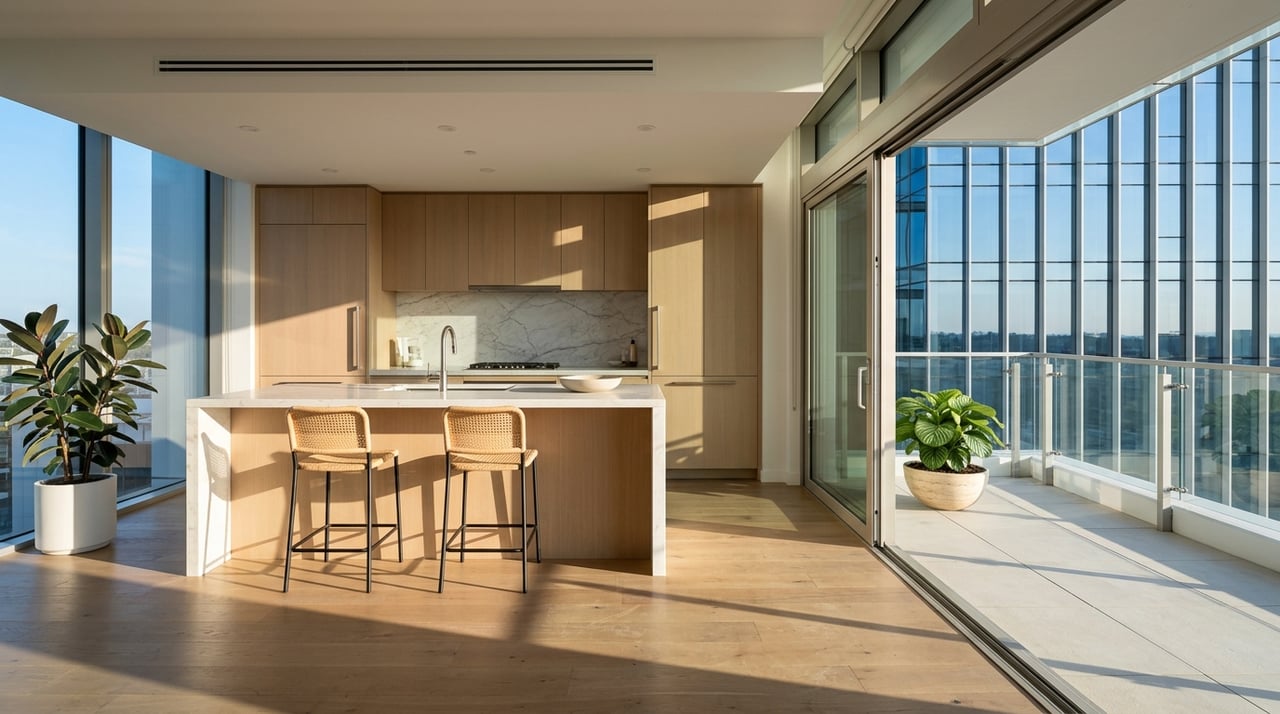
Brickell vs Downtown Miami Condos for Investors
Wondering whether Brickell or Downtown Miami is the smarter condo investment? It is a fair question, especially when both neighborhoods offer high-rise living, strong renter demand, and easy access to the urban core. If you are weighing entry price, rental potential, lifestyle appeal, and future supply, this guide will help you compare the two with a clearer lens. Let’s dive in.
If you want the short version, Brickell is generally the more premium market, while Downtown Miami often offers a lower entry point and more overall inventory. Both are currently buyer-leaning based on current listing data, and both have meaningful rental demand.
For many investors, the right choice comes down to your main goal. If you want a branded, higher-end urban address with second-home appeal, Brickell may stand out. If you want a lower basis and more unit choices, Downtown may be the cleaner fit.
Brickell is currently the more expensive condo market. As of spring 2026, Realtor.com shows a median listing price of $734,500 in Brickell, while Redfin shows a median condo listing price of $715,000.
Downtown Miami comes in slightly lower. Realtor.com shows a median listing price of $693,000, and Redfin shows a median condo listing price of $649,000.
That gap matters if you are trying to preserve capital, diversify across more than one unit, or stay flexible with financing. A lower entry point can give you more room to compare buildings and negotiate.
Brickell has substantial supply, with about 1.2K homes for sale and 1.3K homes for rent according to Realtor.com. Homes there average 92 days on market, with a 95% sale-to-list ratio.
Downtown Miami shows even deeper inventory, with about 2.0K homes for sale and 2.4K homes for rent. Homes average 106 days on market, with a 94% sale-to-list ratio.
For you as an investor, this suggests both markets currently offer some negotiating room. Downtown’s broader inventory can be especially useful if you want more resale options, more side-by-side comparisons, or a better chance of finding a unit that fits a specific rental strategy.
Both neighborhoods are renter-heavy, which supports long-term investor interest. In Brickell, 75% of households are renter-occupied, according to RentCafe.
Downtown Miami is even more rental-oriented, with 81% renter occupancy. Redfin also notes that Downtown has about 34,134 residents and 145,540 jobs, reinforcing its role as a dense live-work hub.
In practical terms, Downtown may cast a wider net for renters who want access to jobs, transit, and entertainment. Brickell, by contrast, tends to align more with renters seeking a higher-end urban experience and a premium address.
Brickell supports slightly higher rents overall. RentCafe reports average rents of $3,687 across apartment types, including $2,420 for studios, $3,300 for one-bedrooms, and $3,923 for two-bedrooms.
Downtown Miami averages are a bit lower at $3,232 overall, with $2,462 for studios, $3,009 for one-bedrooms, and $3,698 for two-bedrooms. Realtor.com places median rents at $3,775 in Brickell and $3,660 in Downtown.
These numbers support a simple takeaway. Brickell may offer more top-line rent potential, while Downtown may offer a lower acquisition cost that appeals to yield-focused buyers.
Using neighborhood average rents from RentCafe and condo median list prices from Redfin as a rough screening tool, Brickell comes in at about 6.2% and Downtown at about 6.0% on a gross rent-to-price basis.
That difference is small, and it does not reflect HOA fees, taxes, insurance, financing, vacancy, or maintenance. Still, it can be a helpful first screen when you are deciding where to spend more time underwriting deals.
This is one reason broad neighborhood labels only go so far. A stronger investment decision usually comes from comparing specific towers, association rules, monthly carrying costs, and unit layouts.
Transit access is a major strength in both neighborhoods. Miami-Dade says the Metromover is free and operates seven days a week in Downtown Miami, Omni, and Brickell.
Brickell station, at 1001 SW First Avenue, connects with buses and transfers to Metromover. In Downtown, Government Center connects to Brightline, Metrorail, and Tri-Rail, which is a meaningful advantage for tenants who value regional connectivity.
Brickell also benefits from stops such as Brickell City Centre, Financial District, and Mary Brickell Village. That network supports leasing appeal, especially for tenants who prefer an urban lifestyle with less dependence on a car.
Downtown has the clearest walkability signal in the available data. Redfin describes it as “supremely walkable” with a Walk Score of 91.
Brickell is also highly transit-oriented, but the day-to-day experience can vary more by building location. In other words, one tower may feel steps from everything, while another may rely more on the Metromover connection and surrounding street pattern.
For investors, that means address-level selection matters. In both submarkets, the exact block and tower can influence renter demand as much as the neighborhood name itself.
Both Brickell and Downtown remain active development zones, and that matters for future competition. The Miami Downtown Development Authority says its Interactive 3D Development Map tracks existing, under-construction, and planned projects across the CBD, Brickell, and the Arts & Entertainment District.
The same authority notes that the Downtown Baywalk is 89% complete and the Miami Riverwalk/Greenway is 68% complete. Those improvements may support long-term residential appeal by strengthening waterfront access and connectivity.
At the same time, supply remains a real consideration. Current project examples highlighted by the DDA include River District with 1,600 units, Baccarat Residences Miami at 444 Brickell Ave with 324 residences, and The Standard Residences in Brickell with 407 residences.
A 2025 DDA demographic study summary reports 29,500 existing units and 8,400 pipeline units across Downtown overall. Within that, the Brickell District accounts for 8,900 existing units and 3,800 pipeline units.
The Central Business District shows 16,800 existing units and 2,000 pipeline units, while the Arts & Entertainment District shows 3,800 existing units and 2,600 pipeline units. The same summary says existing condo units are concentrated in Brickell, while the future pipeline is more evenly distributed across Downtown.
What does that mean for you? It means future competition is not theoretical. In either submarket, you should evaluate each building in the context of incoming supply nearby.
Brickell often makes the most sense if you want a premium urban address, stronger luxury branding, or a condo that can serve both investment and personal-use goals. It may also appeal if you value branded residences, curated towers, and a second-home feel within the urban core.
Because Brickell supports slightly higher rents and a slightly stronger rough rent-to-price screen, some buyers are willing to pay more for that positioning. The tradeoff is a higher basis and continued exposure to new competing inventory.
If your strategy leans toward quality of address, long-term prestige, and lifestyle-driven demand, Brickell deserves a close look.
Downtown Miami is often the cleaner match if your priority is lower entry cost, broader inventory, and access to a larger rental ecosystem. It may be especially attractive if you prefer more options in the resale market and want to compare buildings across a wider pricing band.
Its dense job base, strong walkability, and transit connectivity can support steady renter interest. While rents trend slightly lower than Brickell, the lower acquisition cost may improve flexibility in your search.
If you are more focused on basis, inventory depth, and practical leasing demand, Downtown may offer the better starting point.
If you are considering a short-term rental strategy, do not assume Brickell or Downtown alone gives you the answer. In the City of Miami, short-term rental or lodging use requires zoning confirmation and, for existing buildings, a short-term rental/lodging evaluation form.
Florida condominium law also provides that an amendment restricting rental duration applies only to owners who consent to the amendment or who take title after the amendment becomes effective. That means your rental strategy depends on the specific building’s condo documents and the local zoning status.
This is one of the most important parts of investor due diligence. Before you buy, confirm the intended lease structure at the building level, not just the neighborhood level.
If your main goal is premium positioning, higher-end branding, or second-home use, Brickell usually has the edge. If your goal is lower entry price, broader inventory, and a more straightforward yield screen, Downtown Miami often stands out.
The bigger lesson is this: neither neighborhood should be judged only by headline averages. The best opportunity usually comes from matching your budget, lease strategy, and hold period to the right building.
For investors looking at Brickell or Downtown, a tower-by-tower review can make all the difference. If you want help comparing resale, branded, or pre-construction options and planning for leasing after closing, Fajer International Realty offers a boutique, high-touch approach with investor guidance, rental-management, and property-management support.
Stay up to date on the latest real estate trends.





At Fajer International Realty, we are committed to bringing our clients to another level as representatives of investors, developers, buyers, or sellers. Get in touch today!