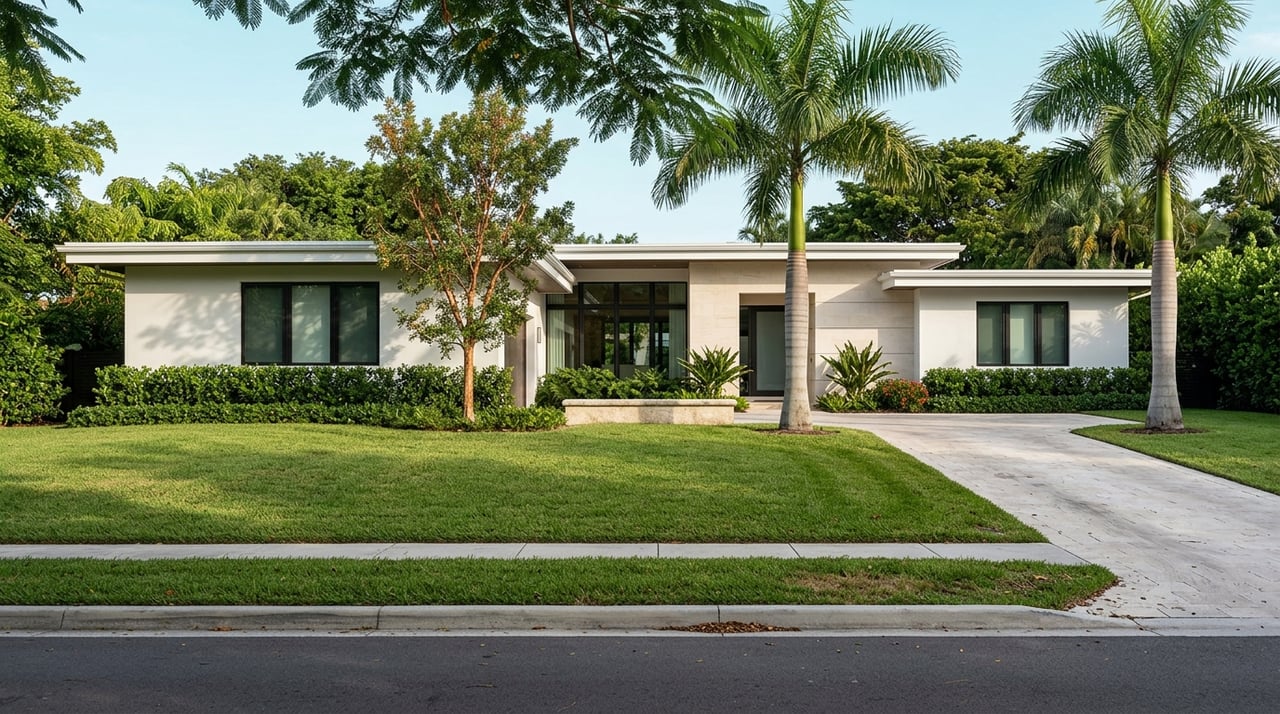
Pinecrest Estate Homes Investment for Long-Term Holds
Looking for a Miami-area investment that feels more like a legacy asset than a quick trade? Pinecrest stands out for exactly that reason. If you are focused on long-term wealth preservation, land value, and steady demand for large homes, this village offers a very different profile from a typical high-turnover South Florida rental market. Here is what you should know before you buy, hold, or reposition an estate home in Pinecrest.
Pinecrest is a small, primarily residential village in Miami-Dade with about 18,635 residents across 7.45 land square miles, according to the 2020-2024 Census estimates. It also has a median household income of $206,417, an owner-occupied housing rate of 82.8%, and a median owner-occupied home value of $1,406,400. Those figures point to a high-value market where many owners are committed for the long run.
For investors, that matters because Pinecrest is not built around constant turnover. The village describes itself as tree-lined residential territory with large estate lots south of Downtown Miami and Miami International Airport. In practical terms, you are buying into a land-focused residential market, not a condo-driven or heavily commercial submarket.
One of Pinecrest’s defining features is its tax base. The village says it relies almost entirely on residential property taxes because it has very little commercial or industrial tax base. That creates a market where local services and carrying costs are closely tied to residential assessments.
For FY 2025-26, Pinecrest adopted a final municipal millage rate of 2.503 mills. If you are underwriting a long hold, this is the kind of local detail that should sit alongside your review of insurance, maintenance, and reserve planning.
In Pinecrest, the land often carries as much strategic value as the house itself. The village’s land-use rules allow single-family dwellings across residential districts, while more intensive housing types are limited. That helps preserve the large-lot, low-density character that many long-term buyers and tenants seek.
The estate districts are also defined by meaningful lot size and site rules:
Building coverage is limited to 20% in EU-1C and EU-1, and 30% in EU-S and EU-M. Minimum green space is 55% in EU-1C and EU-1, and 35% in EU-S and EU-M. Front setbacks range from 50 feet in EU-1C and EU-1 to 35 feet in EU-S and 25 feet in EU-M, with additional rear and side setbacks.
For a long-term hold investor, these zoning rules shape your upside. You are not only evaluating today’s floor plan or finishes. You are also evaluating the code-defined building envelope, future renovation potential, and rebuild flexibility within lot coverage, impervious surface, green space, and setback limits.
That tends to favor patient, well-capitalized ownership. If your strategy includes substantial renovation, expansion, or a future rebuild, you need to think beyond purchase price and model the time and cost involved in design, permitting, and construction.
Pinecrest actively protects the physical character that supports its estate-home appeal. The village says it has planted more than 10,000 street trees since 1997, is recognized as a Tree City USA community, and requires permits for tree removal or relocation. It also states that the tree canopy supports environmental quality, neighborhood identity, and property values.
For you, that means site planning is not purely about structures. Landscaping, tree preservation, and lot presentation are part of the long-term value story in Pinecrest.
Pinecrest is a premium market, but it is not a market for rushed assumptions. Realtor.com’s May 2026 snapshot reported 199 homes for sale, 82 homes for rent, a median listing price of $3.95 million, a median sold price of $2.35 million, a median rent of $7,050 per month, and median days on market of 78. Homes sold for 7.22% below asking on average, with a 93% sale-to-list ratio.
Miami Realtors’ Q4 2025 single-family metrics showed 52 closed sales, a median sale price of $2.6725 million, an average sale price of $3.1443 million, 125 active listings, 7.8 months of supply, and 83 days to contract. Taken together, those numbers suggest a high-priced environment where disciplined negotiation and realistic hold planning matter.
If you want income while keeping long-term upside, Pinecrest can support that, but usually not through a fast-flip or high-churn model. With a reported median rent of $7,050 per month, the rental profile is much stronger than a typical entry-level single-family leasing strategy. This makes Pinecrest more aligned with executive-style leasing for larger homes.
The market data and owner-occupancy profile suggest that long-term leasing may be the more practical path for many estate-home investors. If your goal is to preserve the property, cover part of your carrying costs, and stay positioned for future appreciation or redevelopment, this can be a useful fit.
Public school performance is one part of Pinecrest’s long-term demand profile. Miami-Dade school dashboards show that Pinecrest Elementary School, Palmetto Middle School, and Miami Palmetto Senior High School each received A grades in both 2023-2024 and 2024-2025.
For investors, this supports steady interest from owner-occupants and from tenants looking for larger homes within this public school pattern. It does not guarantee future demand, but it does help explain why Pinecrest often attracts households planning for a longer stay.
Pinecrest is not an effortless short-term rental market. The village requires vacation-rental registration, annual renewal, compliance inspections, a designated responsible party who can respond within one hour and live within 30 miles, plus proof of tax and licensing compliance.
That regulatory structure adds operational requirements that many investors may find less appealing than a traditional lease model. For estate homes in particular, a longer-term tenant strategy is often the cleaner fit if you want simpler operations and lower turnover.
A Pinecrest investment should always be underwritten with resilience in mind. The village promotes floodplain management, participates in the National Flood Insurance Program and Community Rating System, and provides flood-zone and elevation-certificate lookup tools. Its hurricane preparedness guidance also points owners back to these flood resources.
That means insurance, drainage, elevation, and storm-hardening are not side issues. They are core line items, especially for larger homes with pools, mature landscaping, guest structures, or other site improvements that can increase maintenance and exposure.
Pinecrest’s public planning also reinforces its long-hold appeal. The FY 2025-26 budget FAQ highlights a $5 million disaster reserve along with ongoing spending for drainage, roads, and public safety. That suggests a local framework centered on maintaining a residential estate environment over time.
For a patient investor, this matters. Long-term performance is shaped not only by your lot and house, but also by how the village manages infrastructure, storm preparedness, and the day-to-day standards that protect the market’s residential identity.
Pinecrest can be an attractive fit if you want a hard-asset residential holding in Miami-Dade with land constraints, larger homes, and a strong ownership culture. It can also suit investors who value optionality, whether that means leasing now, renovating later, or holding for future generational planning.
At the same time, this is usually not the strongest play for investors chasing fast cash flow or constant transaction volume. Pinecrest looks more compelling as a capital-preservation and legacy-ownership strategy than as a quick-yield story.
Before you move forward, focus on a few practical questions:
These questions can help you separate a beautiful home from a truly durable investment.
If you are exploring Pinecrest as part of a long-term Miami portfolio, the right approach is usually careful, local, and highly tailored. Fajer International Realty offers a boutique, high-touch advisory experience for domestic and international buyers, along with rental-management and property-management support designed to help you invest with confidence.
Stay up to date on the latest real estate trends.






At Fajer International Realty, we are committed to bringing our clients to another level as representatives of investors, developers, buyers, or sellers. Get in touch today!