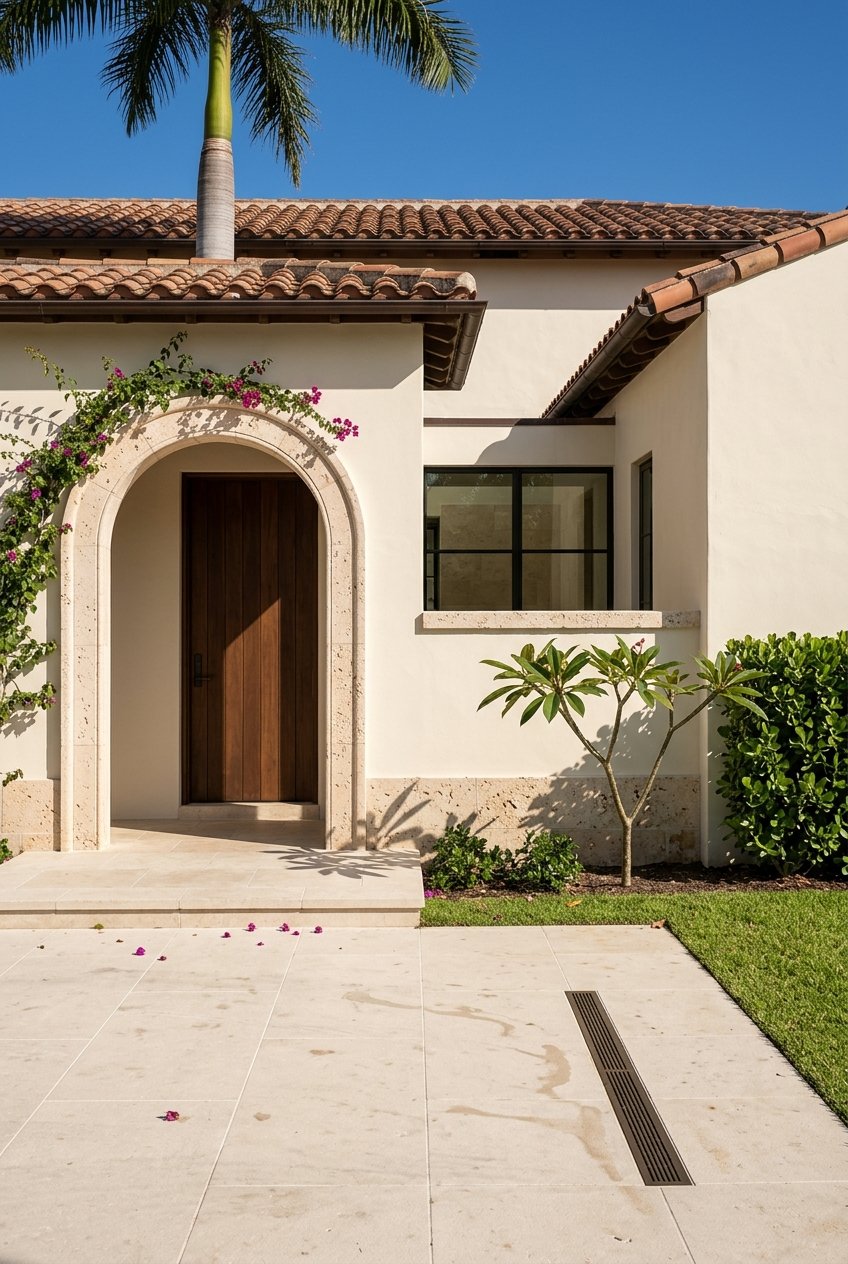
Coral Gables Luxury Homes Market Trends and Timing
If you think every luxury home in Coral Gables trades the same way, the numbers say otherwise. This is a market where a 3-bedroom home, a renovated estate, a teardown lot, and a trophy property can all sit under the same city name while behaving very differently. If you are buying, selling, or investing here, understanding how each layer of the market moves can help you price, negotiate, and plan with more confidence. Let’s dive in.
Coral Gables has a distinct market structure shaped by history, architecture, and regulation. The city was incorporated in 1925, and more than 1,000 properties are listed on the Coral Gables Register of Historic Places. That matters because preservation influences what can be updated, replaced, or expanded.
In practice, luxury homes in Coral Gables trade more like separate asset classes than one uniform category. Historic homes, renovated older properties, rebuilt newer homes, and waterfront estates each attract different buyers and often move at different speeds. That is one reason pricing can look uneven from one sale to the next.
The city also has strong international appeal. Coral Gables is home to more than 20 consulates and foreign government offices, along with more than 140 multinational corporations. For global and cross-border buyers, that adds another layer of demand and helps explain why the market often attracts capital beyond local owner-occupants.
A simple way to understand Coral Gables pricing is to look at what actually sold. In 2025, single-family homes in Coral Gables recorded 375 transactions, with an annual average sale price of $3.565 million. In Q4 2025, the median sale price was $1.915 million, while the average sale price reached $3.77 million.
That gap between median and average is important. It shows that a smaller number of very large estate sales pull the average higher, while the broader market still trades well below the ultra-luxury tier. In other words, headline averages do not always reflect where most homes are actually changing hands.
Bedroom-level data gives an even clearer view:
For buyers and sellers, this creates a practical luxury ladder. The middle of the market is still driven by 3- and 4-bedroom homes. The true luxury band begins around the low-to-mid $4 million range, and the upper end quickly shifts into estate and land value territory.
At the county level, Miami-Dade’s single-family luxury threshold rose to $4.1 million in Q1 2026. That places Coral Gables 5-bedroom homes near the county luxury cutoff, while 6-bedroom and 7+ bedroom homes sit more comfortably above it.
This is helpful if you are trying to define where “luxury” starts in Coral Gables. In many cases, the answer is not just the address. It is the combination of home size, lot quality, condition, and whether the property offers estate-level characteristics.
Coral Gables also posted 22 sales above $10 million in 2025, putting it among Miami-Dade’s leading luxury markets. That confirms there is real depth at the top, even if the very highest price points still represent a small share of annual transactions.
Luxury homes in Coral Gables do not usually trade like fast-moving commodity housing. City-level MLS reports show single-family homes took 54 days to contract in Q1 2025 and 55 days to contract in Q2 2025. By Q4 2025, the reported days on market reached 89.
Different reports track time a little differently, but the message is consistent. Coral Gables homes often require patience, especially at the high end. Sellers typically need strong pricing discipline, and buyers often have room to negotiate.
That showed up in pricing too. In Q4 2025, the average listing discount from original list price was 11%. A public market snapshot in March 2026 also showed homes selling for an average of 5.19% below asking, with a median of 68 days on market.
For sellers, that means aspirational pricing can cost time. For buyers, it means prestige does not automatically eliminate negotiating power.
Inventory in Coral Gables shifted during 2025. In Q2, single-family active inventory stood at 225 listings with 7.4 months of supply. By Q4, active listings had fallen to 164, and months of supply dropped to 5.4, alongside 92 new pending sales in the quarter.
That tightening into year-end suggests buyers had fewer options later in the year than they did mid-year. Still, inventory levels remained high enough to support negotiation, especially when a home was not perfectly aligned with current buyer expectations on condition, layout, or pricing.
This is one reason luxury strategy in Coral Gables has to stay property-specific. A turnkey renovated home may trade very differently from an older home that needs design review, major updates, or a longer approval timeline.
One of the most important forces in Coral Gables is land. Miami Realtors’ 2025 land report put the city’s median residential land sale price at $433 per square foot, up 110% year over year. That ranked behind only Palm Beach and Miami Beach in South Florida.
That figure tells you something critical. In Coral Gables, scarce lots carry real value, and new product often comes through teardown and rebuild activity rather than large-scale new supply. The land under the house can be just as important as the house itself.
For investors and end users, this changes how properties are evaluated. Some homes trade mainly on finishes and lifestyle appeal, while others trade on lot potential, redevelopment upside, or the ability to create a new custom residence over time.
Coral Gables is not a market where you should assume every renovation or demolition path is simple. The city’s Historic Preservation Board works to preserve historic resources and harmonize new development with existing character. That can affect what buyers are able to change after closing.
The city also notes that demolition permits can require a tree survey and tree protection plan. If you are comparing Coral Gables with less regulated submarkets, this is a meaningful difference. Approval paths, design review, and preservation standards can influence both cost and timeline.
For buyers considering a renovation or rebuild, due diligence is especially important. The trade is not only about purchase price. It is also about what the site can realistically support and how long that process may take.
Coral Gables sits in an interesting position within Miami’s luxury landscape. In Q4 2025, Miami Beach single-family homes posted a $3.9 million median sale price, a $7.51 million average sale price, 147 days on market, and 15.8 months of absorption. Coconut Grove showed a $2.35 million median sale price and 146 days on market.
By comparison, Coral Gables posted a $1.915 million median and 89 days on market in the same quarter. That means Coral Gables was generally less expensive and faster moving than some nearby trophy submarkets, even while still offering a serious luxury segment.
The land story supports that too. Coral Gables land traded at a median of $433 per square foot in 2025, compared with $846 in Miami Beach and $110 in the city of Miami. That places Coral Gables firmly in the redevelopment conversation, but still at a different price point than the most expensive waterfront markets.
If you are buying in Coral Gables, the first question is not just budget. It is what type of asset you want to own. A renovated home, a historic property, a newer rebuild, and an estate lot each come with different trade-offs.
Focus on these factors:
For international and second-home buyers, this is where a more advisory approach matters. In Coral Gables, the smartest purchase is not always the one with the best photos. It is the one whose condition, land value, and future flexibility match your goals.
If you are selling a luxury home in Coral Gables, pricing and positioning are everything. The market supports strong values, but buyers are still comparing condition, layout, lot quality, and replacement cost very carefully.
A few realities stand out:
In this market, preparation matters. Clear pricing, thoughtful presentation, and a strategy that reflects the home’s true asset class can make the difference between a smooth trade and a stale listing.
The short answer is scarcity with layers. Coral Gables has architectural history, expensive land, redevelopment pressure, and a meaningful international buyer base. That combination makes the market deeper and more nuanced than a simple median price can show.
The result is a city where the middle of the market remains active, but the upper tier becomes highly property-specific. Once you move into the $4 million-and-up range, buyers are often evaluating more than square footage. They are weighing land, design, replacement potential, and long-term value.
If you are approaching Coral Gables as a buyer, seller, or investor, the best lens is not just “luxury homes.” It is understanding which kind of luxury home you are trading, and how that specific asset tends to move in this market.
If you want private guidance on buying, selling, or investing in Miami’s high-end residential markets, Fajer International Realty offers a founder-led, concierge approach designed for local and international clients alike.
Stay up to date on the latest real estate trends.


At Fajer International Realty, we are committed to bringing our clients to another level as representatives of investors, developers, buyers, or sellers. Get in touch today!