Coral Gables vs Coconut Grove for Luxury Family Life
Trying to choose between Coral Gables and Coconut Grove for luxury family living? Both offer prestige, greenery, and access to some of Miami-Dade’s most established residential areas, but they feel very different once you look past the price point. If you want to narrow your search with more confidence, this guide will help you compare planning, homes, schools, walkability, and daily lifestyle so you can focus on the fit that matches your family best. Let’s dive in.
If you are deciding between these two neighborhoods, the simplest way to frame the choice is this: Coral Gables feels more formal and planned, while Coconut Grove feels more organic and village-like. That difference shapes everything from architecture to lot patterns to how your day-to-day routine may feel.
Coral Gables describes itself as the City Beautiful, with lush green avenues, historic landmarks, and a strong design-review culture. Coconut Grove, by contrast, is recognized as Miami’s oldest neighborhood and is known for its mature tree canopy, varied lot patterns, and distinct local identity.
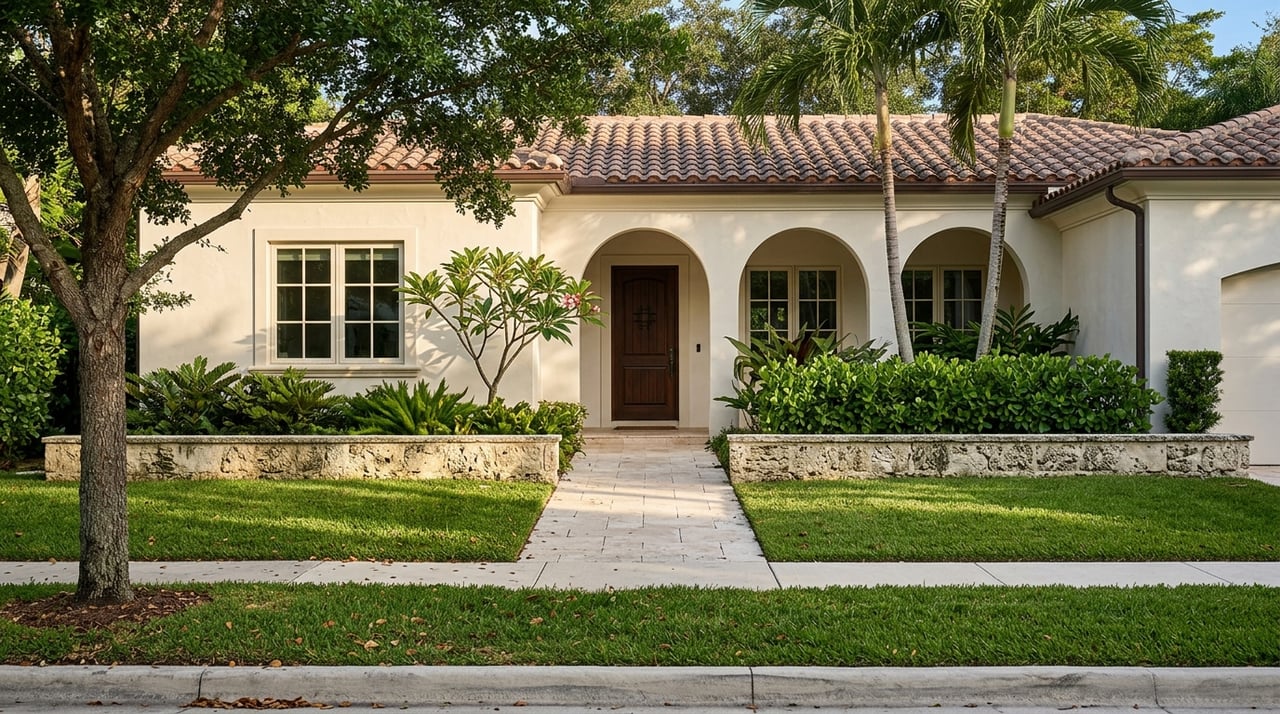
For many buyers, Coral Gables stands out because it offers a more structured residential environment. If you value visual consistency, established planning, and a polished streetscape, this setting may feel especially appealing.
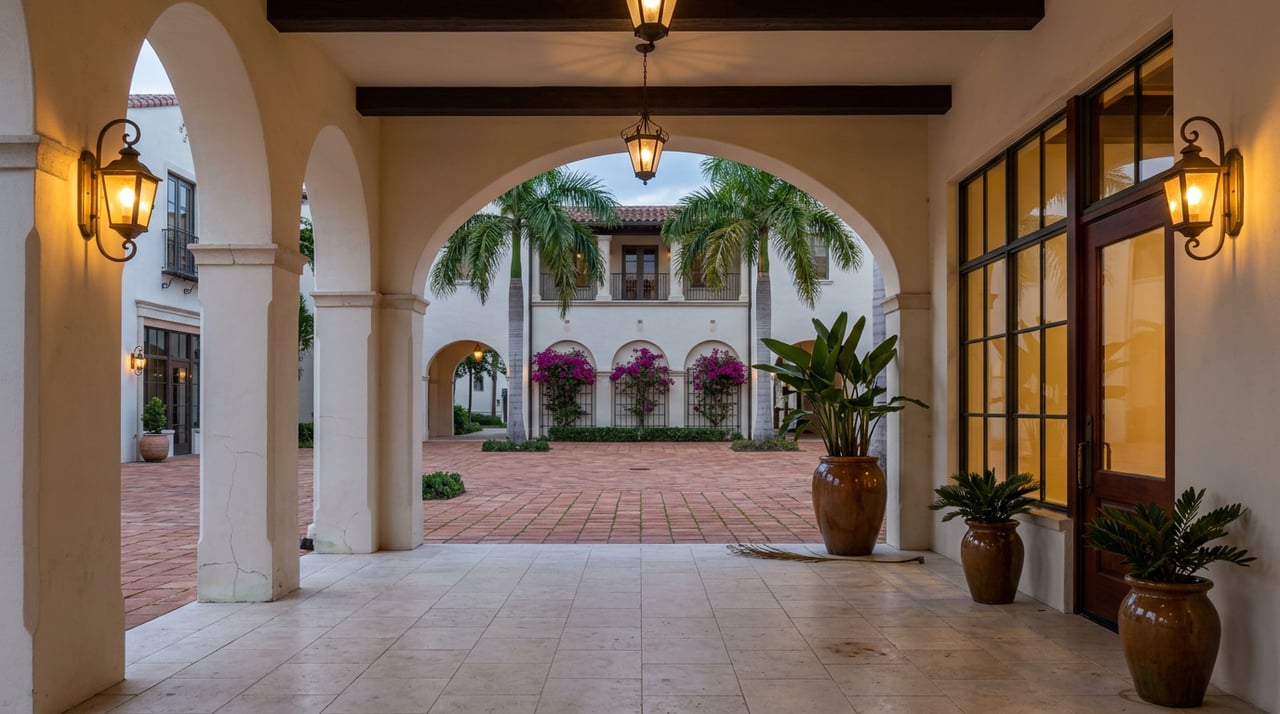
The city also reinforces its architectural character through preservation standards and incentives for Coral Gables Mediterranean Architecture. That creates a stronger sense of continuity from block to block, which many luxury buyers appreciate when they want a timeless look and a more uniform neighborhood feel.
Coral Gables tends to feel more standardized in its housing form. A city committee transcript noted that many single-family lots are platted at 50 by 100 feet, with larger double lots also common.
That does not mean every property feels the same, but it does suggest a more predictable development pattern. If you prefer a search process where lot dimensions and streetscapes feel more consistent, Coral Gables may offer a smoother path.
Coral Gables also requires tree surveys and tree-protection plans as part of its review process. In addition, the city uses a Board of Architects to help preserve its traditional visual character.
For families who care about long-term neighborhood appearance, these layers of review can be a meaningful advantage. They help support the curated look that defines much of the city.
Coral Gables has a compelling public-school story based on the research provided. Coral Gables Preparatory Academy earned an A in both 2023-24 and 2024-25, and the district lists it as a K-8 with a gifted center, extended foreign language, and National Blue Ribbon recognition.
Coral Gables Senior High also posted an A in both years. In 2024-25, it reported a 96.6% graduation rate and 79% of AP exam scores at 3 to 5, along with IB language tracks and dual enrollment.
For buyers prioritizing school-related planning, those details can make Coral Gables especially attractive. It supports a more structured, family-focused search if education access is one of your top filters.
Coconut Grove offers a different kind of luxury. Instead of a highly coordinated visual language, you get a neighborhood that feels layered, historic, and more naturally varied.
If your ideal lifestyle includes walking to local destinations, enjoying a stronger waterfront atmosphere, and living in an area with more architectural range, Coconut Grove may feel like the better match. Its appeal is less about uniformity and more about character.
Coconut Grove’s zoning framework is built around preserving variety. The NCD-3 rules are meant to protect the area’s historic, heavily landscaped character, preserve tree canopy and architectural variety, and maintain its unique property sizes and shapes.
That framework includes multiple minimum lot-size bands such as 5,000, 7,500, 20,000, and 40,000 square feet, along with one-acre estate lots in larger categories. For you as a buyer, that often translates to a more diverse inventory and a search process with wider differences from one property to the next.
Architecturally, Coconut Grove is more eclectic than Coral Gables. The area includes Bahamian and conch houses, bungalows, and other vernacular forms, which gives many streets a less uniform and more individual feel.
That may be exactly what you want if your family prefers a home with personality and a setting that feels less formally planned. The Grove’s identity is closely tied to its historic roots and layered architectural fabric.
Walkability is one of the clearest differences between the two. Walk Score reports Coconut Grove at 74 overall, while Coral Gables averages 56, though some central Coral Gables pockets score significantly higher.
The key takeaway is that Coconut Grove generally offers stronger village-core walkability. If you want the option to leave the car parked more often for dining, errands, or casual outings, the Grove has the stronger edge overall.
Both areas offer strong public-school options based on the research report. That means your decision may come down less to broad reputation and more to the specific school assignment tied to a property address.
In Coconut Grove, Coconut Grove Elementary posted an A in both 2023-24 and 2024-25. George Washington Carver Middle also posted an A in both years and lists international studies language tracks, a gifted center, and National Blue Ribbon School recognition.
Because Miami-Dade continues to review attendance boundaries, address-level assignment should be verified before you assume a property is zoned for a particular school. That is especially important when you are comparing luxury homes across neighborhood edges or near district lines.
| Area | School Example | Recent District Grade | Notable Details |
|---|---|---|---|
| Coral Gables | Coral Gables Preparatory Academy | A | K-8, gifted center, extended foreign language, National Blue Ribbon recognition |
| Coral Gables | Coral Gables Senior High | A | 96.6% graduation rate, 79% AP scores at 3-5, IB language tracks, dual enrollment |
| Coconut Grove | Coconut Grove Elementary | A | Longstanding school history, founded in 1887 |
| Coconut Grove | George Washington Carver Middle | A | International studies language tracks, gifted center, National Blue Ribbon award |
Your daily routine may feel very different in these two neighborhoods, even if both meet your price range and space requirements. This is where lifestyle fit often becomes more important than the home itself.
Coral Gables says it offers more than 60 parks and open spaces. That can be a major plus if your family wants easy access to outdoor recreation spread throughout the city rather than centered around one primary waterfront identity.
Coconut Grove, on the other hand, has the stronger waterfront profile. Dinner Key Marina includes 587 wet slips and 250 moorings, and the city notes that it is within walking distance of groceries, dining, and shopping.
Both neighborhoods benefit from useful transit connections. Coral Gables’ trolley connects Douglas Metrorail Station with key city routes, and the city launched a Southern Loop pilot in November 2025 to extend service toward Red Road, the University of Miami, medical offices, schools, and other hubs.
Coconut Grove’s trolley serves parks, shopping areas, City Hall, Coconut Grove Metrorail Station, Douglas Road Metrorail Station, and Grove Central. The Coconut Grove Metrorail Station also reopened in May 2025 after modernization.
If your household values station access and local circulation, both neighborhoods can work well. Coral Gables may feel more planning-oriented, while Coconut Grove may feel more centered on a walkable village and waterfront rhythm.
If you are still deciding, it helps to match the neighborhood to the way your family actually wants to live. Luxury is not only about finishes and square footage. It is also about how the area supports your routines, values, and long-term plans.
Choose Coral Gables if your priorities include:
Choose Coconut Grove if your priorities include:
One of the most important things to remember is that this is not a simple one-size-fits-all comparison. Walkability can shift by block. School assignment can change by address. Lot size, privacy, and architectural style can vary widely, especially in Coconut Grove.
That is why high-end buyers benefit from a more tailored search. When you compare these neighborhoods property by property, you can more clearly see whether your priorities point toward Coral Gables’ structure or Coconut Grove’s flexibility and charm.
If you are weighing both neighborhoods as part of a luxury move or a long-term Miami investment, working with a boutique advisor can help you narrow the field faster and with less guesswork. To explore the right fit with direct, high-touch guidance, connect with Fajer International Realty.
Stay up to date on the latest real estate trends.
At Fajer International Realty, we are committed to bringing our clients to another level as representatives of investors, developers, buyers, or sellers. Get in touch today!